Beyond Remembering Dates
Rote memorisation treats history like an index of battle anniversaries and coronation days. But true historical comprehension asks why an institution collapsed, how everyday technologies spread, and what material forces spurred change.
When you look into the archives of the British Library, the Vatican Secret Archives, or the National Archives at Kew, you rarely find singular moments of theatrical decision. Instead, history unfolds through agricultural surplus, inflationary pressure, logistical exhaustion, and the stubborn persistence of bureaucratic habit.
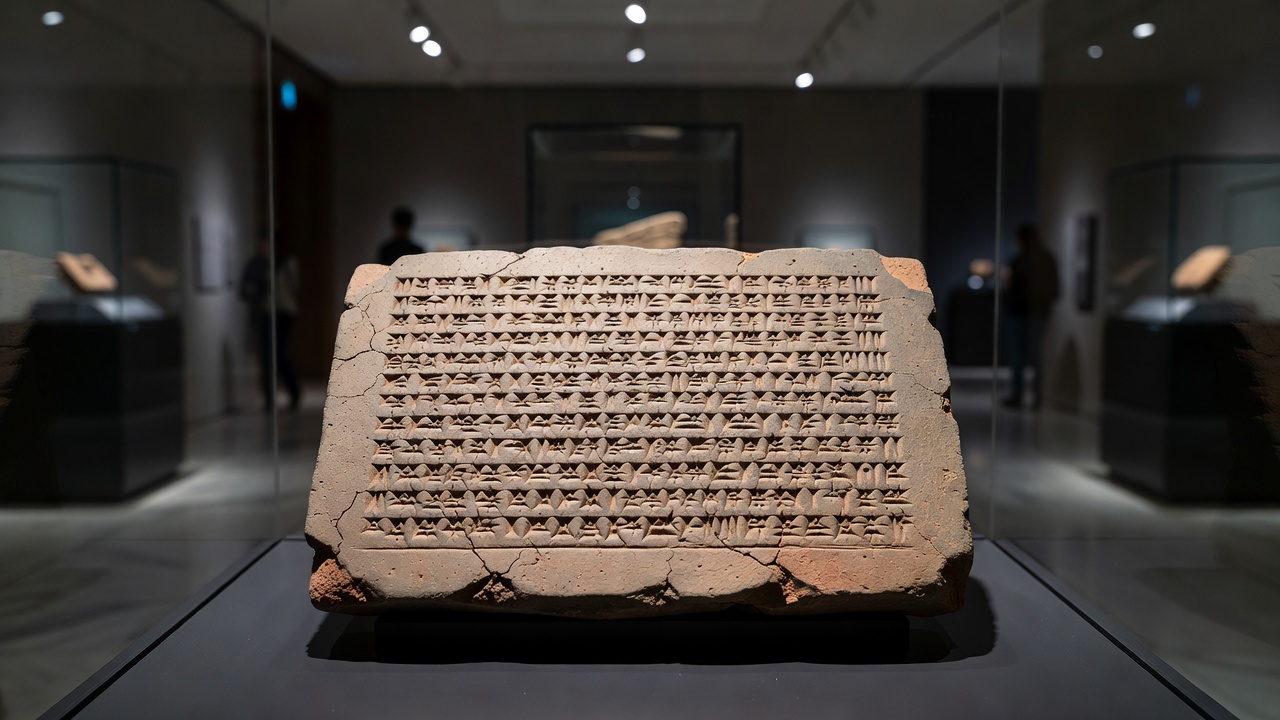
The Bureaucratic Genesis of Writing
Popular imagination often imagines the earliest scribes recording epic mythology or philosophical meditations. In reality, writing was invented by accountants in the Tigris-Euphrates river valley around 3200 BCE to track agricultural transactions.
Excavations by archeologists such as Julius Jordan and later German expeditions catalogued thousands of archaic clay tablets from the Eanna district.
Examine Archival Evidence
Over eighty-five percent of the archaic tablets found at Uruk (dating to the late fourth millennium BCE) are administrative accounting records. They document grain yields, beer distributions, livestock allotments, and labor duties for temple administrators. Literature, hymns, and royal inscriptions appeared several centuries later, only after writing had developed sufficient phonetic nuance to capture spoken language.
The Mechanical Spread of the Word
Johannes Gutenberg’s breakthrough in Mainz around 1450 was not the invention of the printing press itself—wine presses and screw presses had been used in the Rhineland for generations. Gutenberg’s genuine innovation lay in the hand mould for casting durable metal movable type from a reusable lead-tin-antimony alloy, alongside oil-based ink that adhered to metal rather than running off like water-based alternatives.
| Historical Innovation | Common Oversimplification | Material Context & Catalyst | Key Historical Record |
|---|---|---|---|
| Movable Type in Europe (1450s) | Invented by Gutenberg alone | Goldsmithing metallurgy, punch-cutting, and screw press adaptation | Helmasperger Notarial Instrument, 1455 |
| Magna Carta (1215) | First Universal Human Rights Bill | Baronial settlement protecting feudal privileges from King John | Runnymede charter, preserved at Lincoln & Salisbury |
| Fall of Constantinople (1453) | Sudden end of Classical heritage | Migration of Byzantine scholars to Italian city-states had begun decades prior | Council of Florence transcripts, 1439 |
| Black Death (1347–1351) | Pure demographic disaster | Labor shortages increased rural wages and broke serfdom ties in Western Europe | English Statute of Labourers, 1351 |
“History is a process of disciplined inquiry that questions how surviving sources were produced, preserved, and mediated.” Archives of Historical Method
Treaties That Forged Modern Statehood
Before the Peace of Westphalia in 1648, European warfare was often waged across fluid boundaries of religious allegiance and dynastic inheritance. The twin treaties signed in Münster and Osnabrück fundamentally shifted international diplomacy toward the principle of state sovereignty (cuius regio, eius religio), establishing the modern expectation of non-interference in another state's domestic affairs.
The Thirty Years' War devastated Central Europe, reducing the population of certain German principalities by more than thirty percent.
Examine Geopolitical Impact
Westphalia established the concept of sovereign equality among independent nation-states, legally recognising that each ruler held the exclusive right to determine their territory's domestic religion and governance without external papal or imperial veto. This framework laid the foundation for modern international law, diplomatic immunity, and balance-of-power diplomacy.
By probing the logistics of ancient bookkeeping, the metallurgy of print, and the political compromises of diplomatic treaties, history ceases to be a sterile sequence of dates and emerges as a compelling study of cause, consequence, and continuity.